

What are high viscosity fluids?
As the versatility of high viscosity inkjet printing becomes more widely understood, and the breadth of its applications increases, we’re seeing a rise in enquiries regarding exactly what this type of printing can be used for, what the benefits are, and what types of printheads can jet high viscosity fluids.
- Categories:
- Digital Inkjet ,
- Ultra High Viscosity Technology
What are high viscosity fluids?
Viscosity is a measure of a fluid’s resistance to flow. A fluid with high viscosity resists motion due to the internal friction associated with its molecular makeup, whereas the molecular makeup of low viscosity causes very little friction. To put it simply, high viscosity doesn’t flow as easily as a low viscosity fluid. Other factors, including temperature, can impact viscosity, but the main determiner as to whether a fluid is high or low will be the molecular makeup.

Can I print high viscosity fluids with inkjet?
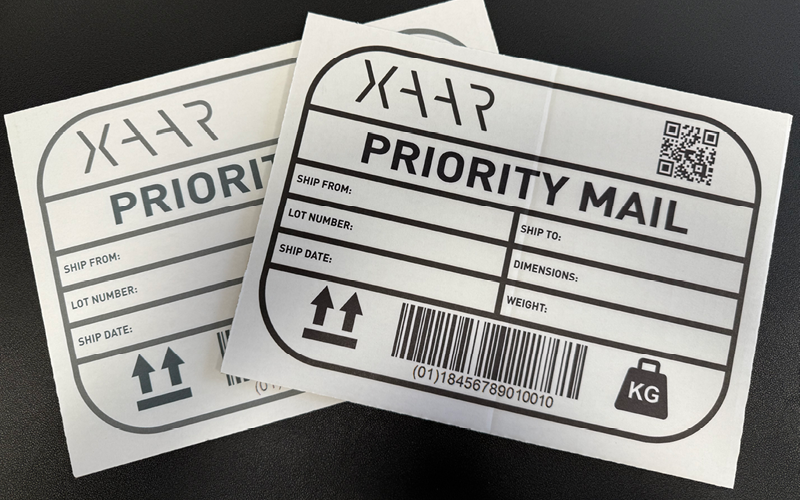
Yes, you can absolutely print high viscosity fluids with inkjet. Today Xaar’s inkjet printheads can handle fluids at viscosities of up to 100 centipoises (cP) at jetting temperature (1000cP at room temperature), meaning inkjet technology can be used across a variety of printing, coating, advanced (functional fluids) and additive manufacturing applications.
Xaar’s printheads have been developed specifically to handle high viscosity fluids and incorporate specialist technology to ensure reliable printing. Xaar’s TF Technology, for example, ensures continuous ink recirculation, preventing sedimentation and air bubbles, which is critical for high-particle or functional fluids. Features such as Sure Flow self-cleaning and High Laydown Technology further enhance reliability and allow for jetting of thick layers, making our printheads ideal for industrial environments where precision and durability are essential.
Applications
What can high viscosity inkjet printing be used for, and why is high viscosity important?
Inkjet printing is rapidly becoming the manufacturing technology for additive manufacturing and 3D printing, as well as for personalisation, coating and other innovative print and manufacturing processes.
New applications are being proposed and tested all the time, but currently high viscosity inkjet printing is being seen in:
Automotive Coating applications: enabling digital paint applications such as two-tone vehicle coatings, eliminating masking and reducing waste
EV battery: jetting high-viscosity dielectric materials to enhance safety, efficiency and scalability
Textile printing: direct-to-garment or direct-to-fabric digital printing
Direct-to-shape: for mass customisation and efficient production capability
Glass: for automotive and industrial purposes, including functional anti-slip and conductive layering
Label Embellishment: including varnishing, textured and high-build effects, and braille
Interior Decor: transforming cost-effective materials such as wood into premium, high-value décor elements
3D printing: jetting phase change materials for increased reliability and superior print quality
Packaging: producing higher quality and brighter images on substrates such as uncoated corrugate
Benefits
What are the benefits of high viscosity fluids for printing?
The ability to print high viscosity fluids such as adhesives, paints and photoresists also presents efficiency and waste reduction benefits. For example, high viscosity jetting allows precise placement of materials only where needed. This is especially important in automotive, printed circuits and electronics applications where reduced contamination and tooling contact is essential.
Material efficiency is a further key benefit. For example, in jetting paint on cars, overspray-free application reduces waste, with
Xaar’s partner Axalta reporting that this can contribute to a 30 percent reduction in CO2 emissions and significant cost savings for two-tone vehicle painting, through precise placement of the fluids. High viscosity also prevents “paint sag” allowing pillars and doors to also be printed. This, combined with the removal of the need to mask areas and process vehicles twice, dramatically improves efficiency and reduces cost.
Inkjet printing also offers a reduction in energy consumption for certain applications. For example, the energy required for corrugate printing is reduced as less water is absorbed into the corrugate board, and therefore systems require less drying.
High viscosity inkjet printing is increasing the capability of inkjet and offers an agile, cost-effective, high-precision solution both for decorative and functional applications, across a broad range of sectors. And, as awareness and use of the technology grows, so does the list of fluids which are being jetted, including UV, oil and water-based options.
But, in order to jet high viscosity fluids, the printheads selected need to be the right ones for the job. Xaar’s recirculating printheads, such as our 50X, Nitrox, 2002 and Aquinox are all capable of jetting high viscosity fluids, a capability which a number of printhead manufacturers cannot provide. With this in mind, for those looking to develop high viscosity applications, the choice of printhead provider is essential for the performance level and overall success of any project.
If you’re unsure whether high viscosity inkjet is appropriate for your application, please get in touch for guidance from our team of experts.
Want to learn more about high viscosity printing applications? Click here.