

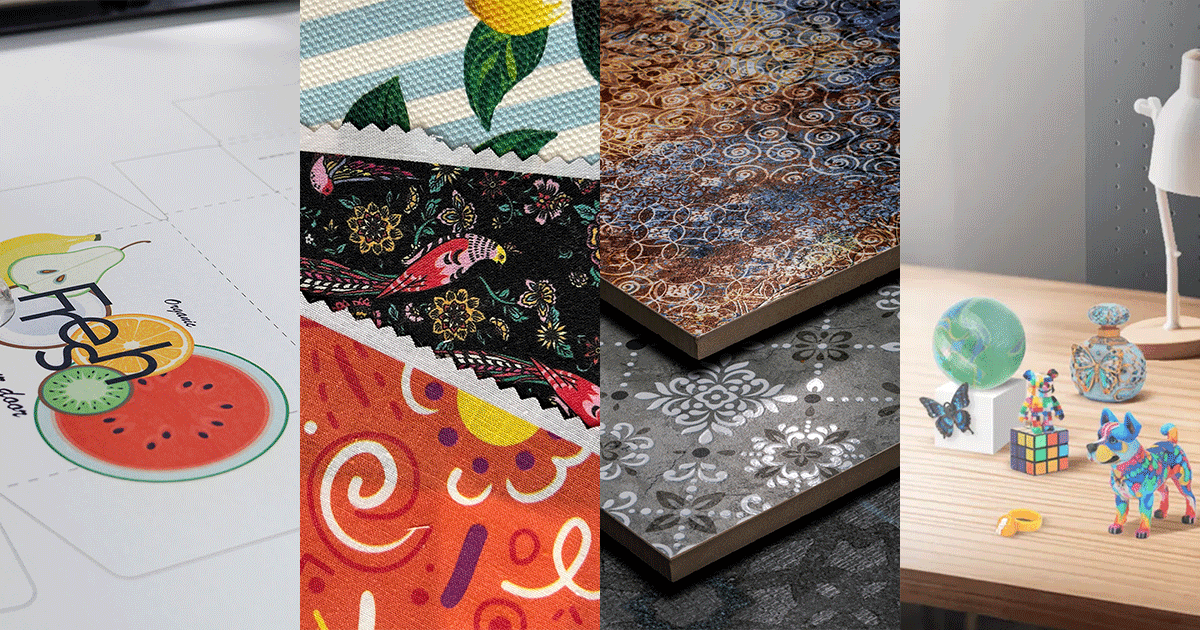
Digital printing can be used across a wide range of industrial applications, including ceramics and glass, labels and packaging, textiles, and 3D and additive manufacturing. It can also support the jetting of specialist and high viscosity fluids, expanding its use in areas such as electronics and functional fluid deposition. Think of digital printing more as a manufacturing process than just a printing process.
Digital printing applications: where digital inkjet delivers value across industries
- Categories:
- Digital Inkjet ,
- Ultra High Viscosity Technology ,
- Ceramics ,
- Labels
Digital printing applications: where digital inkjet delivers value across industries
Digital inkjet printing is a highly versatile technology, utilised across numerous industries including ceramics and glass, labels and packaging, textiles, 3D and additive manufacturing. Compared with analogue processes, digital inkjet printing offers manufacturing efficiencies by supporting short runs and item customisation, while reducing waste and helping manufacturers improve flexibility, quality and efficiency.
Understanding the final application requirements are key when choosing the correct inkjet technology as not all printheads are equal. With inkjet’s move from simple printing towards an innovative manufacturing process, printheads capable of jetting high viscosity fluids including wax, adhesives, paints and photoresists, are truly expanding the capabilities of digital inkjet.
Digital printing for ceramics and glass
Digital inkjet printing presents an effective, cost-efficient, high-performance solution for both glass and ceramic applications. For architectural glass and ceramics, digital printing offers creative freedom without the need to create or store screens, making one-off designs, small batches and customised runs far more economical. This, together with new manufacturing processes being needed for the new larger tile formats, means that digital inkjet printing is the only viable process for textures and designs.
When it comes to automotive glass applications, digital inkjet printing allows suppliers to add logos and variable data to glass, with compatible inks delivering the required optical density, chemical durability and abrasion resistance, and being able to print this on both flat and curved surfaces give manufacturers further options to improve efficiencies.
Inkjet printing technology also enables the deposition of complex functional fluids for smart glass applications, adding properties such as conductivity, anti-slip surfaces or enhanced energy efficiency through a quick, efficient and resource-conserving digital inkjet process.
Digital printing for labels and packaging
Digital inkjet printing is an ideal solution for labels and packaging, with the ability to produce limited edition, personalised or prototype packing simply and easily. Digital printing packaging is also perfect for products with varying or seasonal demand and often offers brands shorter lead times so less costly stock holding.
Digital printing also adds value to packaging by providing a vast selection of embellishment opportunities as well as functional benefits including defined braille printing and high-speed coding. With Xaar’s High Creativity print mode and High Laydown Technology, for example, customers can achieve laydowns from 15 to 100µm in a single pass – ideal for delivering high-build gloss, spot varnish, and matte textures on premium labels across wine, spirits, cosmetics, and more. And, as the delays associated with analogue printing do not apply, short run limited edition labels, mass personalisation and late-stage differentiation are easily achievable.
Beyond embellishment, digital inkjet printheads can support precisely defined braille labelling. Xaar’s Versatex printbar features a specialised braille mode with enhanced speed and high laydown capabilities allowing for rapid, highly accurate, braille printing.
When it comes to historically difficult to print packaging, such as corrugated applications, technology such as Xaar’s Aquinox printhead, paired with high viscosity inks, delivers flexo level quality, vibrant colours, and low cost per print in a single pass while providing the flexibility and personalisation of digital printing.
Digital inkjet technology supports printing across multiple packaging formats, including corrugated cardboard, flexible packaging, bottles and cans. From single items to high‑volume runs, digital inkjet printing makes it easy to localise, personalise, or customise packaging for promotions and special campaigns, with no minimum order quantities or lengthy changeovers required.
Digital printing for 3D and additive manufacturing
3D and additive manufacturing is where digital inkjet really shines. No longer is 3D just FDM filament printing with binder jet and UV now much more commonplace for prototyping and the manufacturing of components.
Xaar’s printhead architecture, including features such as our unique Through Flow (TF) Technology and High Laydown (HL) Technology, mean our products can handle ultra‑high viscosity fluids while delivering high material laydown. Together, these allow the jetting of application‑specific materials that were previously difficult to process reliably, supporting new additive manufacturing applications.
The digital inkjet printing of phase change materials such as wax is another 3D application that is gaining popularity. This is seen in the 3D printing for jewellery producers which takes over from the resin printing which improves process efficiencies and cost.
Digital printing for Advanced Manufacturing
Digital inkjet printing is making a big impact, replacing traditional and existing manufacturing with a highly accurate, sustainable and reliable process. As an example, spray coating is now becoming less attractive with inkjet printing taking over.
The automotive industry is now embracing inkjet for printing car roofs and logos, removing both time, waste and unnecessary expense from production. While the battery and energy storage industry is replacing wrapping and spraying of dielectric coatings on battery cells with inkjet as it provides a more uniform and durable coating so improving battery reliability. High-viscosity fluids are essential for both applications as this controls layer thickness and also sag when the fluid is applied to vertical surfaces. Material efficiency is also optimised, with the overspray-free precision application offered by digital ink jet printing reducing wastage and costs.
Digital printing for textiles
Using digital inkjet printing for textiles can deliver a host of benefits, including reduced resource usage, reduced costs and increased personalisation and customisation.
Capable of handling both dye-based and pigmented fluids, with jetting fluids of much higher viscosities (up to 100cP), inkjet printheads such as the Xaar Aquinox present the ability to apply richer, more vibrant colours to a greater range of materials compared to traditional analogue solutions.
The Xaar Aquinox printhead also offers reduced energy consumption and water usage (both in production and drying times), which in textile printing can equate to as much as a 60 per cent saving in energy and water over similar analogue printing processes. For textile printing of any kind, digital inkjet printheads offer a solution which saves time and money whilst delivering improved quality and creative freedom.
A summary of digital printing applications
Ultimately, inkjet digital printing offers advantages across a broad cross-section of industries. Its versatility empowers businesses to respond quickly to market demands, offer personalised products, and operate with greater efficiency, making inkjet digital printing a valuable asset in today’s fastmoving, innovation-driven environment.
What’s more, by eliminating the need for plates and reducing waste (water, energy and jetted fluids), inkjet technology streamlines workflows and supports more sustainable practices.
Digital Printing Applications - FAQ
What can digital printing be used for?
Can digital inkjet printing be used for ceramics and glass?
Yes. Digital inkjet printing offers an effective, cost-efficient, high-performance solution for both glass and ceramic applications, including architectural and automotive uses. It can also enable the deposition of functional fluids to add properties such as conductivity, anti-slip surfaces or enhanced energy efficiency.
Is digital printing suitable for labels and packaging?
Yes. Digital inkjet printing supports a wide variety of labelling and packaging applications, including embellishment, braille printing, high-speed coding and customisation across formats such as corrugated cardboard, flexible packaging, bottles and cans.
How is digital inkjet used in additive manufacturing?
Digital inkjet printing can support 3D and additive manufacturing by improving precision, reducing material wastage and enabling the jetting of ultra-high viscosity fluids and highly loaded materials. Applications including jewellery production, EV battery coating and solar cell coating to name but a few!
Can digital textile printing reduce water and energy use?
The Xaar Aquinox printhead can reduce energy consumption and water usage in textile printing, with savings of as much as 60 per cent over similar analogue printing processes. It is also suitable for conductive fluids such as those seen in the pre-treat of direct to garment printing.
What types of fluids can industrial inkjet printheads handle?
With the right printhead, today’s digital inkjet technology can jet high viscosity fluids including wax, adhesives, paints and photoresists. Dye-based and pigmented fluids, as well as highly loaded and application-specific materials for additive manufacturing can all be printed.
How is digital inkjet used in additive manufacturing?
Digital inkjet printing can support 3D and additive manufacturing by improving precision, reducing material wastage and enabling the jetting of ultra-high viscosity fluids and highly loaded materials. Applications including jewellery production, EV battery coating and solar cell coating to name but a few!
Talk to Xaar about your digital printing application
From ceramics and glass to packaging, textiles and additive manufacturing, digital inkjet printing gives manufacturers greater flexibility, supports customisation, and can help reduce waste across a wide range of applications. Choosing the right printhead and fluid strategy is key to unlocking the full value of digital inkjet in any market.
Whatever your market, learn more about digital inkjet printing by getting in touch with the team today.