

Yes. Industrial inkjet can print colours, patterns, images, logos and variable content directly onto one or more edges of a closed book. The best results require suitable ink chemistry, accurate material handling and a printhead designed for the fluid and orientation involved.
Inkjet Book Edge Printing: Benefits and Technology
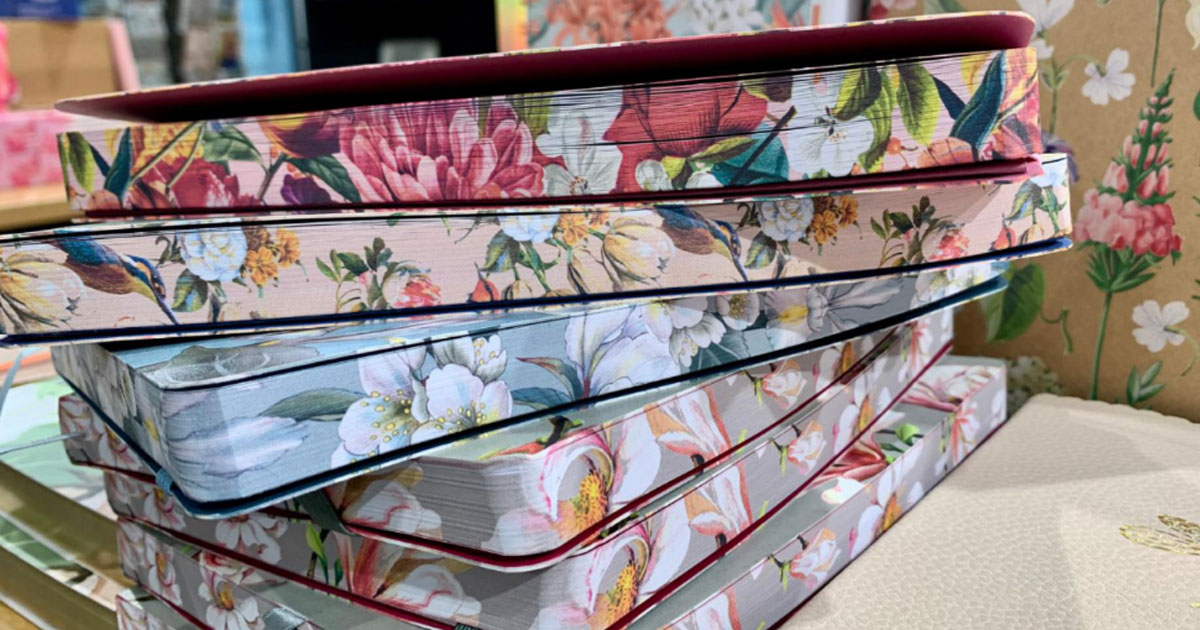
Learn how industrial inkjet book edge printing enables vibrant decoration, personalisation and automated production using aqueous, high-pigment inks.
Inkjet Book Edge Printing: A New Chapter for Book Decoration
Book edge printing uses digital inkjet technology to apply colour, patterns, imagery or branding directly to the trimmed edges of a closed book, giving publishers and printers a new decorative surface without changing the book’s pages or cover.
As interest in special editions, personalised books and distinctive product design increases, printed book edges offer a way to create greater visual impact. However, producing detailed edge decoration efficiently has its challenges. Book edges are absorbent, their shape can vary and, in traditional workflows, each edge may require separate handling, meaning a specialist approach is required.
In order to overcome these complexities, book edge printers are increasingly turning to industrial inkjet printing. With the right printhead, fluid and machine configuration, industrial inkjet can deliver an automated, high-quality production process capable of decorating all three edges in line.
Below is our quick guide to book edge printing, and specifying the right printhead for the job.
What is book edge printing?
Book edge printing is the application of decorative or functional print to one or more edges of a book block. Designs can include:
Solid colours
Detailed patterns
Illustrations
Logos and branding
Personalised elements
Variable designs for individual books
For publishers, this creates an opportunity to differentiate exclusive editions, gift products, branded merchandise, notebooks and educational materials. For printers, it adds a higher-value service and makes productive use of a surface that would otherwise remain blank.
Why can book edges be difficult to print?
Unlike a smooth sheet or coated surface, the edge of a book is formed from many individual pages, making it highly absorbent.
When a low-viscosity ink is applied, capillary action can draw the fluid between the pages, potentially resulting in ink bleed, reduced detail or colours that appear less saturated.
The shape of the book introduces another challenge. Spine curvature may alter the position of the edge, so artwork must be aligned accurately to each product.
These complications often result in issues when hand spraying is attempted for book edge decoration, including page bleeding and fusing, and damage to page structure.
A reliable production system is therefore required to control the ink carefully while compensating for physical variation from one book to the next.
Why is inkjet suited to book edge printing?
Digital inkjet offers several advantages for book edge printing.
Artwork can be changed digitally: Designs can be updated without producing new plates, screens or tooling.
Variable content becomes possible. Different books can carry different artwork, supporting personalisation and versioning.
Ink is deposited precisely. Controlled drop placement supports fine detail and more consistent results.
The process can be automated. Inkjet can be integrated with book trimming, transport and palletising equipment.
Multiple edges can be printed in one workflow. Purpose-built equipment can remove the need to handle and reorient every book repeatedly.
The absence of conventional tooling also makes digital production well suited to changing designs, multiple titles and special-edition work.
Why does ink viscosity matter?
Ink viscosity has a direct effect on how fluid behaves on the exposed edges of paper.
Higher-viscosity, highly pigmented aqueous inks can remain closer to the surface instead of penetrating deeply between the pages - this helps produce stronger blacks, vibrant colours and finer detail with less visible bleed.
The Xaar Aquinox printhead is specifically designed for industrial aqueous inkjet and supports higher-viscosity, highly pigmented fluids, including inks which are particularly popular in book edge decoration, such as gold, which are known for challenging higher viscosities. Its Ultra High Viscosity Technology supports fluids up to 100 cP under jetting conditions, while TF Technology circulates fluid directly past the back of the nozzle to help prevent sedimentation, remove unwanted air and particles, and maintain consistent jetting.
For book edge printing, that combination addresses two essential requirements: keeping a challenging ink stable inside the printhead and controlling how it behaves when it reaches the paper.
How does industrial inkjet automate book edge printing?
One example is Matti Technology’s ChromoEdge system, developed using Xaar Aquinox printheads. The fully automated, single-pass machine is designed to print all three book edges and integrate with established high-volume finishing workflows.
Books can move directly from a three-side trimmer into the print station, then continue to a downstream palletiser. This creates a no-touch route through edge decoration rather than requiring an operator to load, turn and print every edge individually.
Inside the machine, the Aquinox printheads print vertically, whilst in-built TF Technology supports by continuously recirculating fluid through the printhead. Each system can use between 12 and 18 Aquinox printheads, depending on its configuration.
ChromoEdge is specified for gross throughput of up to 4,000 books per hour. It also offers automated maintenance, separate colour profiles for long and short edges, and real-time compensation for spine curvature.
How is artwork aligned to the book?
Printing a rectangular design onto a book with a curved spine requires more than accurate drop placement.
In ChromoEdge, cameras capture each book and the image is adjusted in real time according to the measured curvature of its spine. This allows the printed design to remain correctly positioned on the available edge.
The machine’s digital front end can also apply separate colour profiles to the long and short edges. This compensates for the different fibre directions in the paper and supports more consistent colour across all three sides.
Can inkjet book edge printing support efficient production?
Yes. The main efficiency advantage comes from connecting digital decoration directly to the finishing line.
With an automated system, books do not need to be removed, stored, reloaded and turned for each edge. They can move from trimming through printing and into palletising as part of a continuous workflow, reducing manual handling and removing several intermediate production stages.
High-pigment ink also supports efficient material use because strong colour can be produced without allowing excess fluid to soak into the pages.
Choosing technology for book edge printing
Printers and OEMs evaluating an inkjet book edge solution should look beyond headline resolution and speed. Important considerations include:
Compatibility with aqueous and highly pigmented inks
The viscosity range supported by the printhead
Fluid recirculation and resistance to sedimentation
Reliable operation in the required print orientation
Control of bleed on absorbent paper edges
Artwork alignment and spine compensation
Colour management across different fibre directions
Integration with trimming and palletising equipment
Maintenance requirements and recovery after idle periods
Support for personalisation and rapidly changing artwork
Ultimately, the correct combination of printhead, fluid delivery, ink, software and material handling is critical in determining whether a system can deliver consistent industrial performance.
A new chapter for book production
Printed book edges turn unused space into an opportunity for creativity, and industrial inkjet makes that opportunity more scalable by combining digital flexibility with automated handling and production-level output.
Our collaboration with Matti Technology demonstrates what’s possible when printhead capability, ink formulation and machine engineering are developed together. Xaar Aquinox provides the aqueous-fluid compatibility, high-viscosity jetting and recirculation technology needed for demanding book edge applications, while ChromoEdge converts those capabilities into an integrated production process.
For publishers, the result is greater creative freedom, and for book printers, it creates a practical route to offer distinctive, higher-value products at industrial scale.
Speak to Xaar about aqueous industrial inkjet and discover how the right printhead technology can support your next application.
Book Edge Printing FAQs
Can inkjet print on the edges of a book?
Can all three book edges be printed?
Yes. Purpose-built systems can print the top, bottom and fore edge. ChromoEdge is designed to print all three edges in a fully automated, single-pass production workflow.
Will ink soak between the pages?
This is only a possibility if the ink and print process are not suitable. Higher-viscosity, pigment-loaded inks help the fluid remain nearer the surface, reducing capillary penetration and supporting stronger colour and finer detail.
What is the benefit of high-viscosity ink for printed book edges?
High-viscosity ink can help reduce bleed on absorbent paper edges. It can also carry a higher pigment load, supporting rich blacks, vibrant colours and better definition.
Can every book have a different edge design?
Digital inkjet can support variable artwork because image data is supplied digitally. The precise degree of variability available will depend on the machine’s digital front end and production workflow.
How fast is industrial book edge printing?
Matti Technology specifies ChromoEdge for gross output of up to 4,000 books per hour, printing all three edges. Actual production output will depend on book format, artwork, line configuration and operating conditions.
Which book formats can be printed?
ChromoEdge is designed to support hardcover book blocks, paperbacks and flap paperbacks within the machine’s specified dimensional range. Suitability should be confirmed for the intended format and material before production.
Can book edge printing be integrated into an existing finishing line?
Yes. ChromoEdge is designed to integrate with upstream three-edge cutters and downstream palletisers, allowing books to move through edge printing without separate manual handling.